Do International Standards exist?
Yes, over the years the Metal Spray Industry has developed International Standards (ISO) as well as regional standards based on the International ones. The standards cover such things as: Technical supply conditions for wires, rods, cords and powders Approval testing procedures for sprayers Acceptance Inspection of equipment Protective coating procedures Design of articles to be metal […]
Can I use Metal spray on site applications also?
Yes, the Flame, Arc and HVOF processes can all be operated on site as they are available in mobile forms. For any on-site scenarios, the same standards of Health & Safety procedures need to be applied after undertaking a site risk assessment.
How does Metal spray compare with electroplating?
Benefits of Metal Spraying Over Electroplating: Adhesion is usually better Non-metallic surfaces can be treated Engineering alloys can be applied as coatings Thicker deposits can be applied There is no risk of Hydrogen embrittlement Deposition rates are higher There is no component limitation size Coatings can be applied on site There is no effluent disposal […]
How does Metal spray compare with painting?
Metal Spraying Offers the Following Advantages Over Painting: Materials are of consistent quality and purity, no mixing required before application. Materials have an infinite shelf life if stored correctly. Fewer process steps required. This allows simpler quality control and fewer opportunities for error. Sprayed components require no protracted curing or drying times giving superior utilisation to floor […]
Do I have to paint / powder coat the coating afterwards?
No, it is not necessary to paint or powder coat the coating afterwards. However, in doing so, when correctly applied, it can enhance the life of the coating further. As the colours of Metal Sprayed coatings are limited, a paint or powder coat layer on top of the Metal Sprayed layer is often used for decorative […]
How does Metal Spray compare with Welding?
Metal Spraying Offers the Following Advantages: Low pre-heat or no pre-heating required. No heat treatment is necessary after coating. Little heat is transferred to the substrate during coating. No risk of thermal distortion. There is little risk of metallurgical degradation of the substrate. Almost any substrate can be coated. There is no dilution of the […]
Does Metal Spray use solvents?
No solvents or chemicals are used, just pure metal. The process only uses a heat source through which a powder or wire is fed, melted and projected onto the substrate.
Metal Spray Rokide Rods
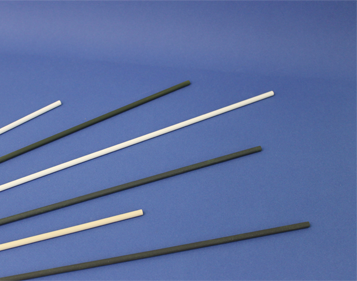
MSSA Rokide® ceramic flame spray rods deliver highly wear-resistant coatings that protect metal & non-metallic surfaces in high-temperature, abrasive and corrosive environments. Rokide® rods optimize deposition efficiency while providing high particle-to-particle cohesive bonding. The process creates hard, chemically inert coatings far superior to those provided by powder systems. Thicker coatings of up to 0.80 mm (0.030 inch) […]
Spray Fuse Powders

MSSA stock a wide range of powders for our Powder Jet 85 Flame Spray System, which are suited to a Spray Fuse Coating. The list below details a selection of the range of Spray Fuse powders available. If the powder you are searching for is not listed, please contact us with your enquiry as in most cases we will be able to […]
Ceramic Powders

MSSA stock Ceramic and Metal Spray Powders used to provide Ceramic Coatings. The powders are for use with Flame Spray, Plasma, HVOF, Spray Weld, Cold Spray, Laser Weld and Plasma Transferred Arc (PTA) Hard Facing. We supply our own range of powders, but can offer other brands as required, just ask our sales team and […]